An irregular period is often the first symptom that makes a woman wonder whether she has PCOS or PCOD. However, menstrual irregularity has several possible causes, and symptoms alone cannot establish a diagnosis.
Understanding the broader pattern can help women decide when a gynaecological evaluation is appropriate.
What Is Commonly Called PCOS or PCOD?
Polycystic ovary syndrome, commonly known as PCOS and frequently referred to as PCOD in everyday conversation, is associated with hormonal and metabolic changes that can affect menstruation, ovulation and other aspects of health.
Symptoms differ considerably between women. Some have obvious menstrual changes, while others first seek medical advice because of acne, unwanted hair growth or difficulty becoming pregnant.
Mamata Hospital in Mira Bhayandar offers gynaecological evaluation for women experiencing menstrual and reproductive health concerns, including symptoms associated with PCOS.
Common Signs That May Need Evaluation
Possible features include:
- Irregular menstrual cycles
- Long gaps between periods
- Difficulty predicting ovulation
- Acne or oily skin
- Increased facial or body hair
- Hair thinning
- Weight-related concerns
- Difficulty conceiving
Having one of these symptoms does not automatically mean a woman has PCOS.
Why Are Periods Affected?
A regular menstrual cycle depends on coordinated hormonal changes and ovulation. When ovulation does not occur regularly, menstrual cycles may become unpredictable.
This can also affect fertility because conception depends partly on the release of an egg.
However, PCOS is not the only explanation for irregular periods. Pregnancy, substantial weight changes, stress, thyroid conditions, hormonal contraception and the approach to menopause can also alter menstrual patterns.
How Is the Cause Investigated?
Evaluation begins with medical history.
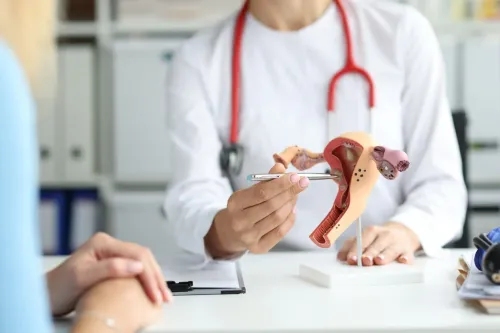
A doctor may ask about menstrual frequency, weight changes, skin or hair symptoms, medicines, pregnancy plans and family or medical history. Depending on the situation, examination, blood investigations or imaging may be considered.
Treatment is then based on the actual problem rather than the diagnostic label alone.
For example, a woman primarily concerned about irregular periods may require a different approach from someone seeking fertility treatment.
Can Lifestyle Changes Help?
Healthy eating, regular physical activity, sleep and sustainable weight management can form part of PCOS care for some women. Medical treatment may also be recommended depending on symptoms and reproductive goals.
Women in Mira Bhayandar experiencing persistent irregular periods should avoid self-treating based only on online symptom lists.
Tracking menstrual cycles and discussing the complete symptom pattern with a gynaecologist can provide a much clearer understanding of what is happening and whether further evaluation is required.
Keywords